

Party blackjack gives familiar twenty-one gameplay a livelier live-table setting shaped by music, hosting, and shared participation. Players can recognize the core rules while learning how the party-style format changes pace and interaction. EG33 provides the requested brand context, while current access, limits, and features should be checked before wagering.
What makes party blackjack different from traditional card games?
The main distinction is presentation rather than rewritten blackjack fundamentals. party blackjack adds social rhythm through hosting, music, and wider participation. These features change interaction while chance remains central to every hand.
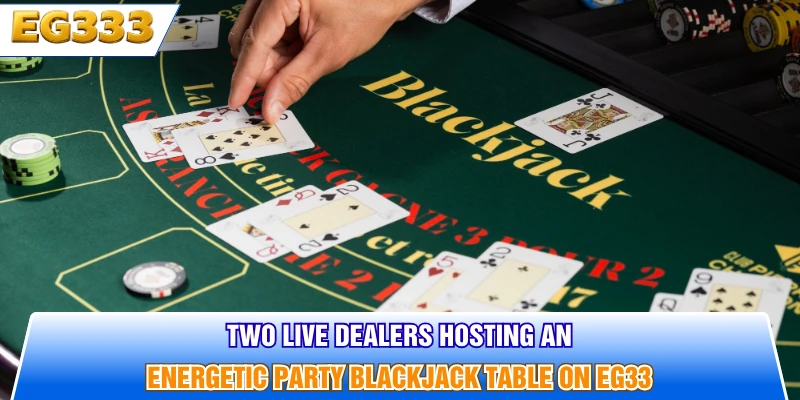
Dual-dealer dynamic and upbeat music atmosphere
A dual-dealer setup gives party blackjack a busier presentation, with hosts maintaining conversation around the live table. Upbeat music strengthens the party theme, making sessions feel more like entertainment programming than quiet card-room play. That energy does not change card probabilities, so hosting and music should not be treated as strategic information.
On smartphones, reduced stream quality may help Bangladeshi users conserve mobile data while retaining the live atmosphere. Connection stability matters because interruptions during live rounds can make quick table actions harder to follow accurately.
Low stakes and unlimited bet behind feature
The lower-stakes positioning makes party blackjack approachable for users preferring smaller wagers within a fixed entertainment budget. Bet behind lets additional participants wager on a seated player’s hand without securing a direct table position. Here, “unlimited” describes the supplied bet-behind feature and should not be interpreted as unlimited monetary stake sizes.
Minimums, maximums, and denominations may vary, so users should confirm the active table’s displayed limits before wagering. A hypothetical BDT 1,000 session fund illustrates budgeting without implying that any particular table accepts those amounts.
Side-by-side game comparison
A comparison separates party-style presentation from standard live blackjack structure. Both formats aim to beat the dealer without exceeding twenty-one, although table rules can differ. Party tables emphasize social energy, while standard tables usually maintain a conventional atmosphere. No verified numerical betting limits were supplied, so the table avoids unsupported figures.
| Information | Party | Standard live |
| Presentation | Music-led, social atmosphere | Conventional live-table atmosphere |
| Dealer format | Dual-dealer dynamic | Commonly one active dealer |
| Bet behind | Prominent participation feature | Availability varies by table |
| Side wagers | Perfect Pairs and 21+3 discussed | Options vary by table |
| Limits | Check displayed table limits | Check displayed table limits |
Basic rules and lucrative side bets explained
Core decisions remain important when optional wagers add variety. In party blackjack, learning the main hand first separates standard decisions from side-bet outcomes. Read side-wager rules and payouts directly from the active table before staking money.

Fundamental card values and hand combinations
Number cards keep face value, while tens and picture cards count as ten in a blackjack hand. An ace normally counts as one or eleven, keeping a hand flexible as additional cards change totals.
The objective is finishing closer to twenty-one than the dealer without exceeding twenty-one, which causes a bust. A two-card twenty-one containing an ace and ten-value card is blackjack, subject to displayed settlement rules. Before playing party blackjack, review dealer drawing rules and available actions because these details influence basic-strategy decisions.
Understanding perfect pairs and 21+3 side wagers
Perfect Pairs asks whether the player’s first two cards form a qualifying pair under the displayed categories. The 21+3 wager combines the player’s first two cards with the dealer’s visible card for poker-style evaluation.
Qualifying categories can include straights, flushes, and three of a kind, depending on the table’s published paytable. Side wagers settle independently, so their results do not determine whether the primary blackjack wager wins. In party blackjack, read each paytable first because no verified payout schedule or house-edge figure was supplied.
How to use the bet behind option effectively
Bet behind helps when seats are occupied by allowing another participant to wager on a seated hand. The seated participant generally controls decisions, so followers may not choose every hit, stand, double, or split.
Before using party blackjack bet behind, observe the participant’s decisions and understand which actions the interface assigns. Treat this as an access and social feature, not a method for improving the likelihood of favorable cards. On smaller screens, confirm the selected hand and wager amount carefully, especially when several positions appear together.
Practical tips to improve your gaming session experience
Preparation matters more than chasing short-term results from random cards. party blackjack can move quickly, so knowing standard decisions and limits reduces rushed choices. These habits suit mobile-first users balancing screen size, connection quality, data use, and spending.

Using basic strategy cards in a social setting
A basic strategy card maps established actions to the player’s hand and dealer upcard under particular table rules. Keeping a reference visible can reduce impulsive choices when music, chat, or quick dealing becomes distracting. Charts must match relevant rules because differences in decks, doubling, splitting, or dealer behavior change recommendations.
In party blackjack, consult the chart before acting instead of following another participant’s confidence or winning streak. Basic strategy supports consistent decisions but cannot predict shuffled cards, remove the house advantage, or guarantee profit.
How to manage your gaming budget while enjoying your session
Budget control keeps a session within an entertainment amount you can afford to lose. BDT examples make planning concrete for Bangladeshi users but remain personal budgets, not assumed table limits.
- Set a fixed session allowance, such as a hypothetical BDT 1,000, and avoid adding money simply because several hands lose.
- Divide the allowance into consistent wagering units that leave room for multiple rounds without requiring aggressive stake increases.
- Set a time limit alongside the money limit, because fast live rounds can make total spending less noticeable.
- Treat side bets as optional entertainment costs instead of automatically attaching them to every main-hand wager.
- Stop when the planned budget or time limit is reached, rather than chasing losses with larger stakes.
Conclusion
Party blackjack combines familiar rules with dual-dealer energy, side wagers, and bet-behind participation in a social live-table format. Basic strategy supports consistent decisions, while firm limits matter because no system removes financial risk or random outcomes. EG33 completes the requested brand context, while current access, limits, and interface details should be verified before wagering.